Detail Lighting’s in-house design department took full responsibility for the lighting layouts, calculations, and control strategy.
We set 3500K as the standard colour temperature across the workspace – an ideal balance between visual comfort and alertness for working environments.
The scheme was developed in line with CIBSE LG7 recommendations, ensuring the right balance of horizontal and vertical illuminance to support comfortable, productive workspaces.
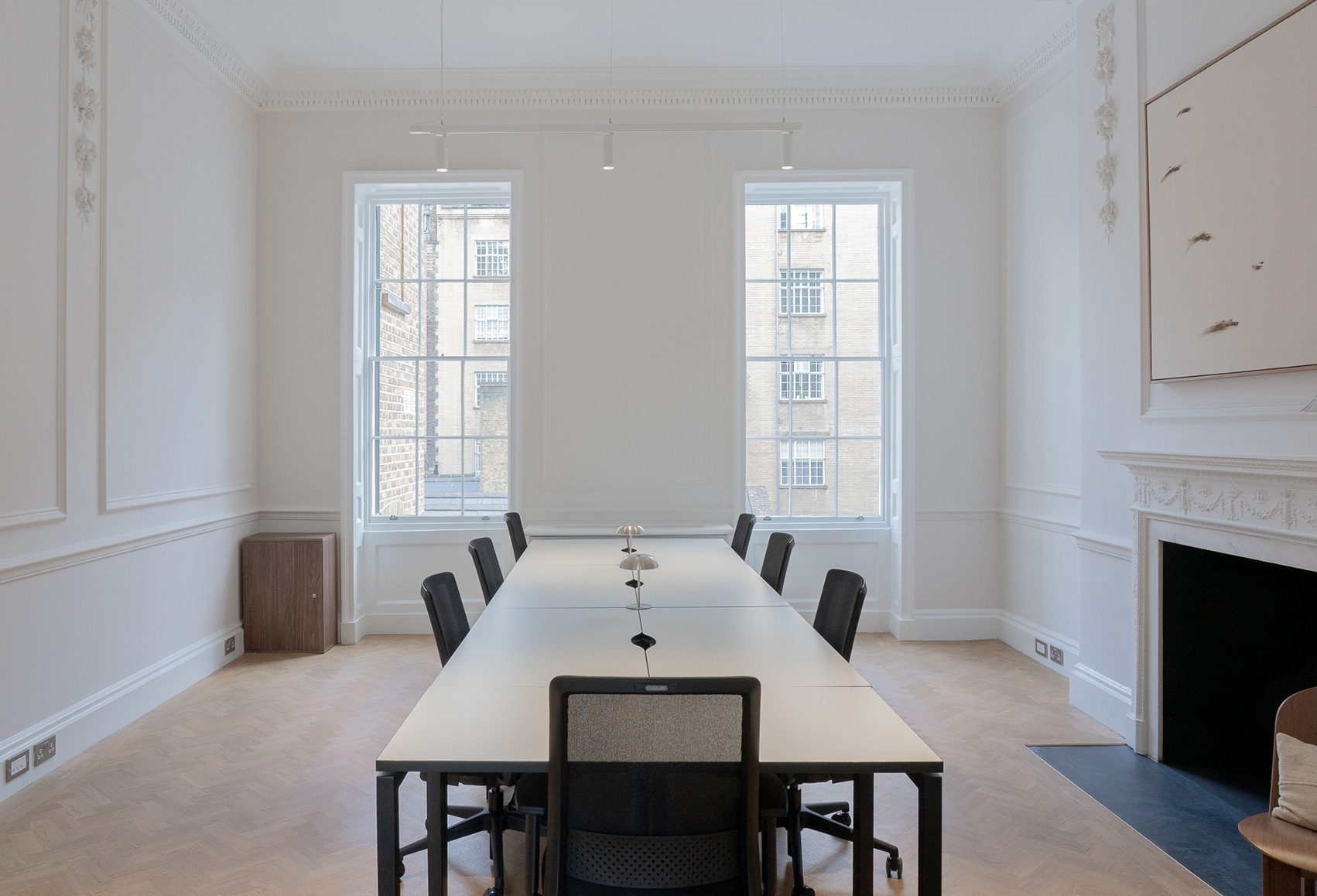
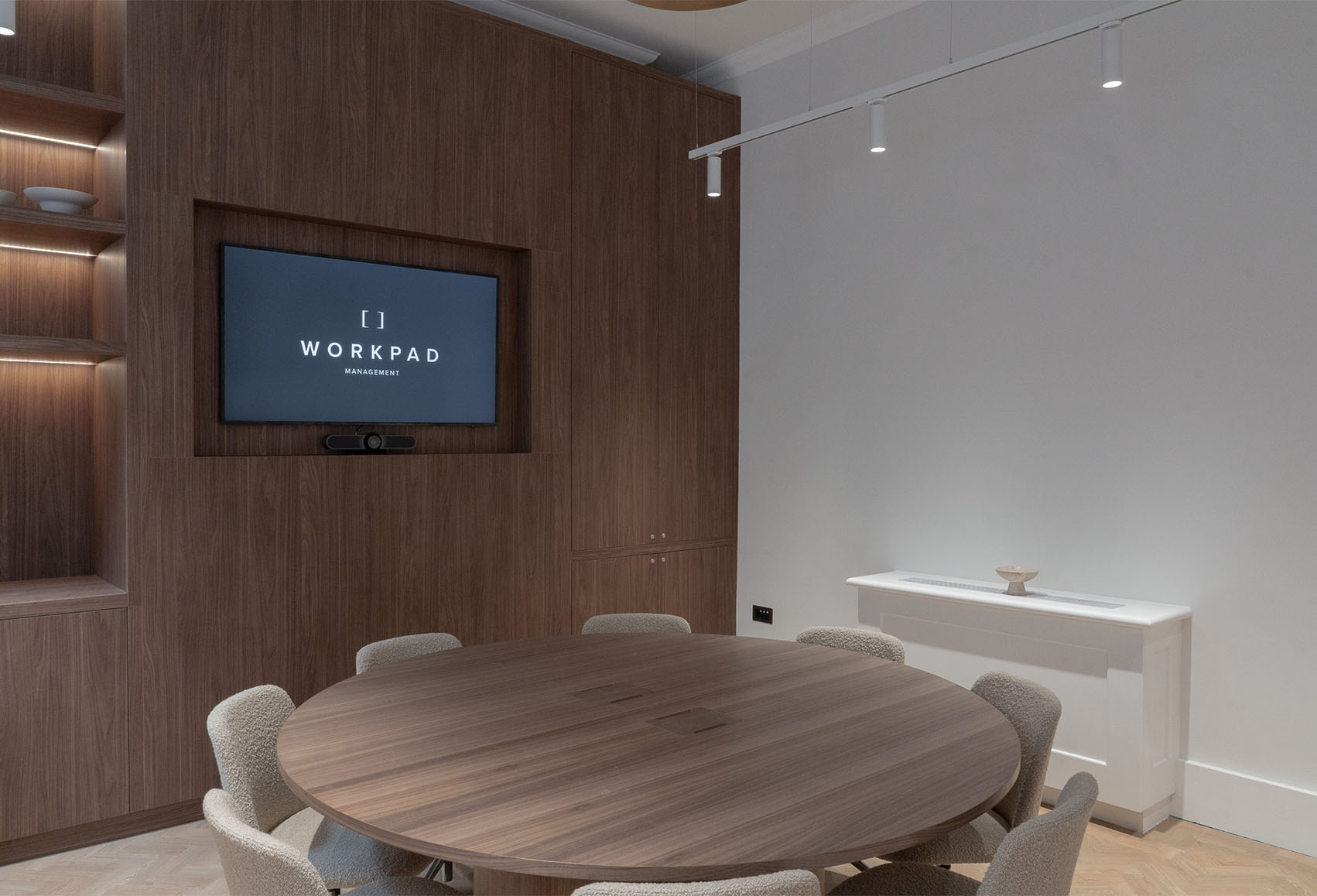
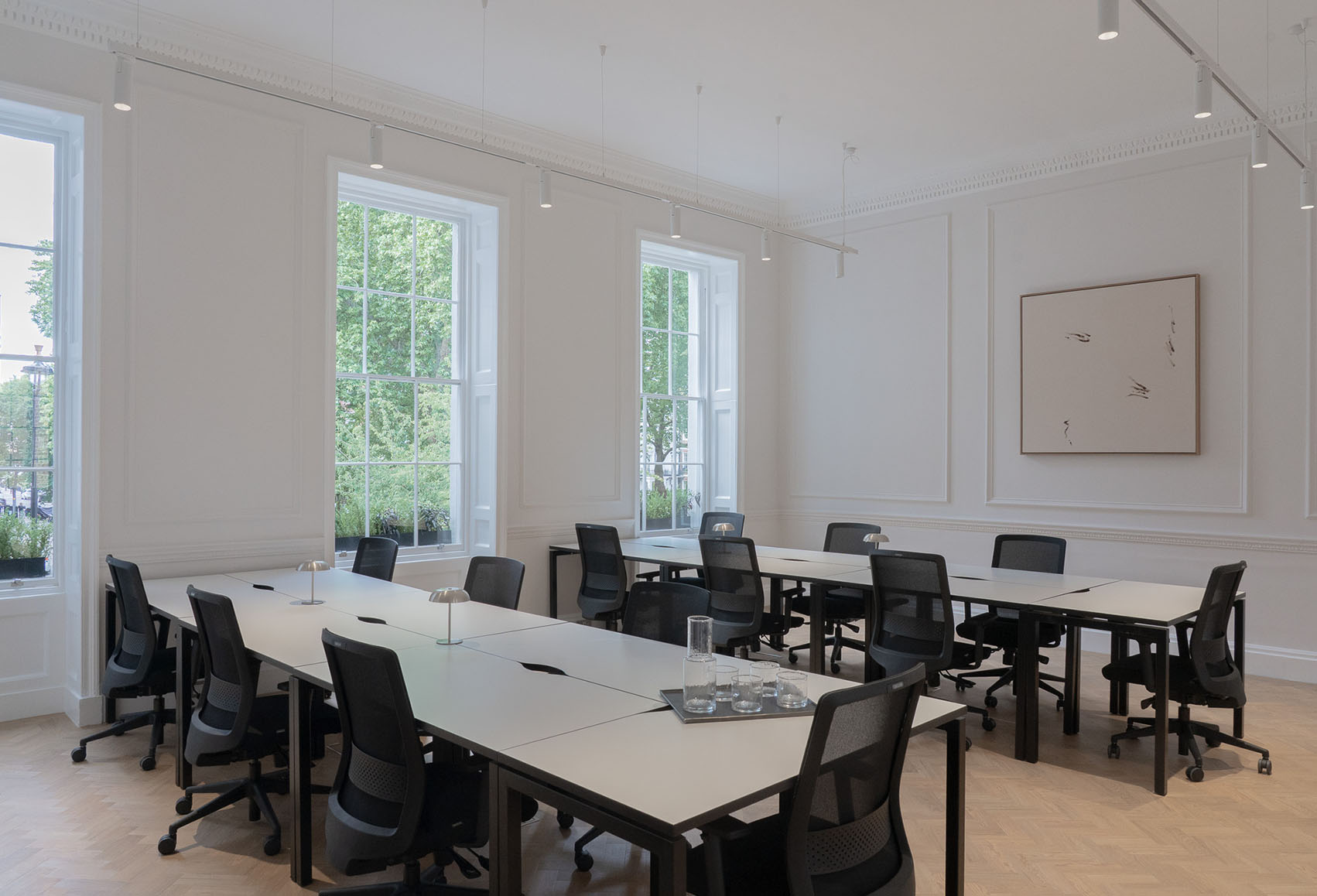
Because 11 Manchester Square is a heritage building with ornate ceilings and architectural detailing, we selected track and spotlight systems as the most practical and flexible lighting solution. These minimise ceiling penetrations, preserve the building’s period features, and allow fixtures to be repositioned as tenants and room layouts change.
We specified ALT Spotlights as the primary luminaire, chosen for their optical precision, compact form, and low-glare performance.
A combination of beam angles was used to ensure both uniformity and visual interest across different zones.
Honeycomb accessories were fitted to reduce glare and increase visual comfort, particularly in areas near screens or where seating faced the luminaires.
For larger open-plan areas, we incorporated our LED Track Linear Lighting fittings, which provide soft, consistent ambient illumination with a low UGR16 rating.
This helped maintain comfortable luminance levels across wider spaces while ensuring the lighting hierarchy between task and ambient layers remained balanced.
Every track system was supplied ‘Casambi enabled’, allowing Workpad and their tenants to control their own lighting scenes and respond to daylight variation throughout the day. Casambi control also provided occupancy and daylight sensing to enhance efficiency and tenant experience.
Sustainability formed a central part of our approach. Instead of replacing existing communal wall lights, we refurbished and upgraded them with new LED engines and integrated emergency functionality. This retained the building’s original aesthetic while improving performance, compliance, and efficiency.
The approach significantly reduced waste and embodied carbon – aligning with our ‘repair, why replace’ strategy.
Throughout the project, our team provided technical design support, lighting calculations, and product integration to ensure compliance with both design and emergency lighting standards. We also produced documentation and a clear handover package so the landlord could easily manage and adapt the system for future tenants.
_new.png)